Products

High Quality

Steel Pipeline Products

We are presently the leading manufacturer of medium and large steel pipes in Tanzania. Hence we are in a unique position to offer an extensive range of steel pipeline products and the relevant technical support.

What separates TSP from other manufacturers is the on-time delivery of quality products in premium condition. We produce high quality products through a streamlined, efficient  and controlled manufacturing process.  The process begins with the purchase of the best  raw materials from reputable suppliers we have been dealing with for over two decades  now. Quality control is embedded in all stages of production to ensure that the end product  meets required customer specifications and approved standards.

Advantages of Steel Pipes:

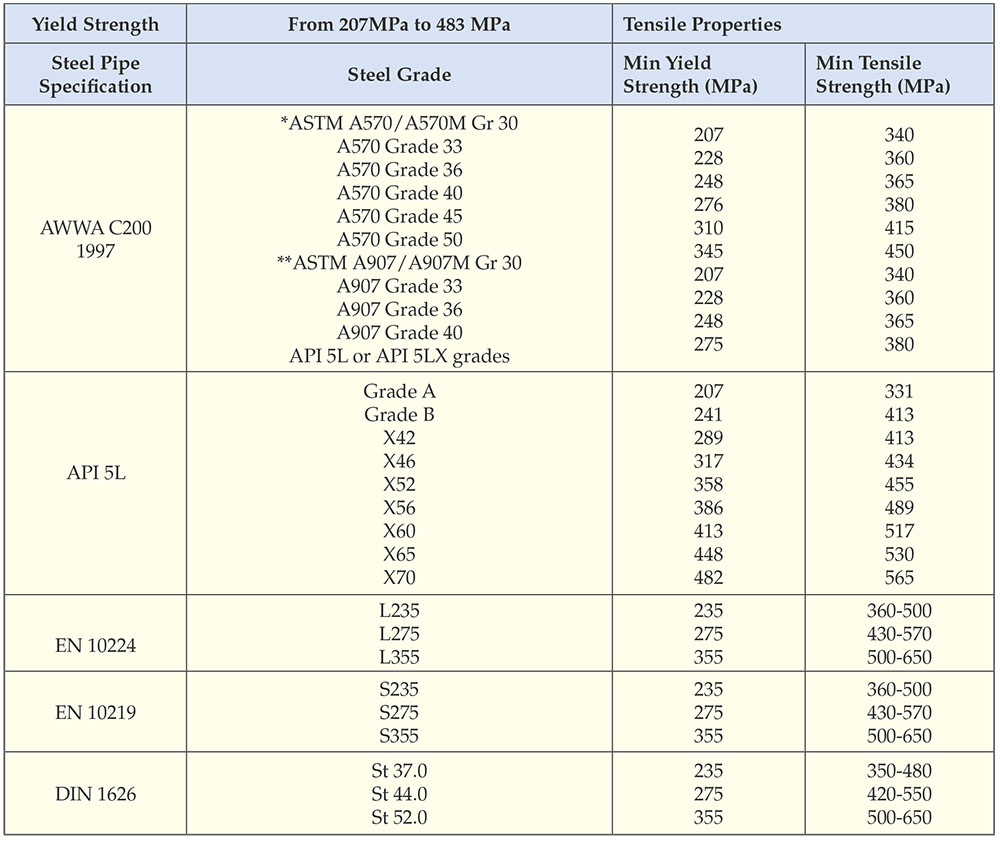
 Steel pipes are manufactured from a wide variety of steel to suit both internal pressure requirements and external earth and traffic loadings. The minimum yield stress of such steels varies from 207MPa to 551MPa. The design engineer thus has the choice of specifying a higher yield strength steel without increasing wall thickness and weight of the pipe to achieve the required safety factor (usually 2), or a lower one when actual internal pressure requirements and external loadings are sufficiently light, thus saving on costs.

Steel pipes provide exceptionally high working pressure capability.

 A key advantage of steel is its ability to be rolled, formed and welded, which allows it to be engineered and manufactured into pipes of various sizes, shapes and configurations.

Steel pipes have minimum elongation values of 25% and above resulting in high ductility. This allows them to withstand stresses and strains without breaking under shock from surge, water hammer and a host of other natural and man made disturbances. This means the pipe can be cold-bent in the field or subjected to considerable overhand loads without failure.

 Steel pipes have a higher modulus of elasticity (approx. 210,000 MPa) compared with other materials.

Steel pipe manufacturing has extremely tight minus thickness tolerances. For example a pipe of DN600 mm is at most 0.35mm below the nominal thickness.

Net factors of safety of the various pipe materials have to take into account minimum elongation values, minus tolerances on thickness and the presence of a low strength casting skin. Hence the effect of tight thickness tolerance and high values of minimum elongation (25% and above) results in factors of safety ranging from 1.7 (DIN 2460) to 2.0 (AWWA C200) being specified for steel pipes

Steel pipes have relatively lighter walls requiring less labour to transport and install. Longer pipe lengths also enable faster and more economical installations. Dielectric coatings and cathodic protection lead to long life spans and low maintenance as well

Steel grades availability:

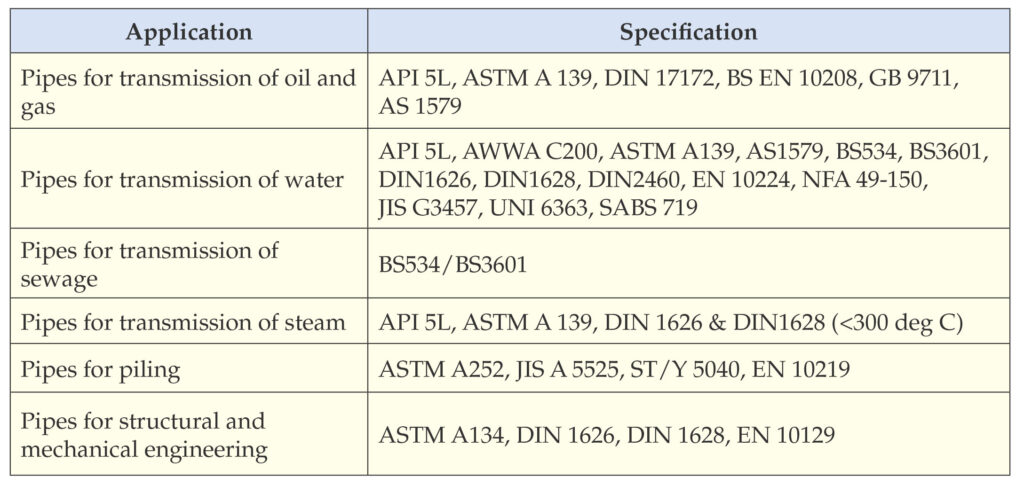
Production Standards:

Our factory is configured to manufacture steel pipes to various internationally recognized standards. We recommend the following standards for the various applications

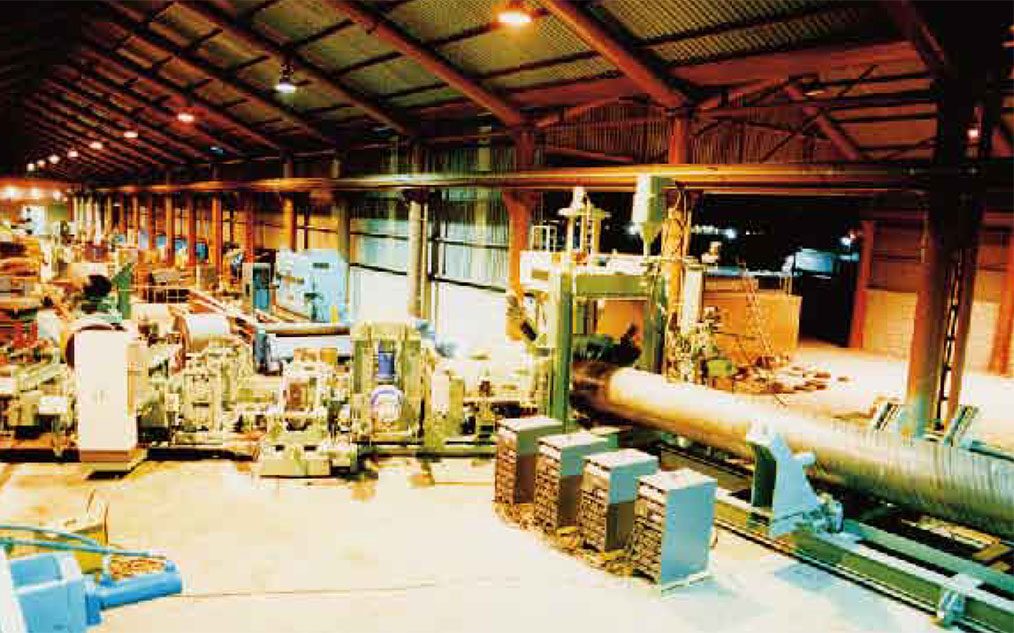
Spiral Weld Steel Pipes

The Spiral Weld Pipe, as the name implies, is a steel pipe that has a seam running its entire length in a spiral form. We have produced such pipes, most suited for high-pressure service, in diameters ranging from DN250mm – DN2000mm. The high performance levels of our pipes are achieved mainly by:

• Modern advancements in the welding technology. (Our pipe mill is equipped with the submerged arc welding system).

• The availability of high quality hot rolled steel coils of sufficient width.

• The application of stringent testing (both destructive and non-destructive) during manufacturing in line with the recommended standards.

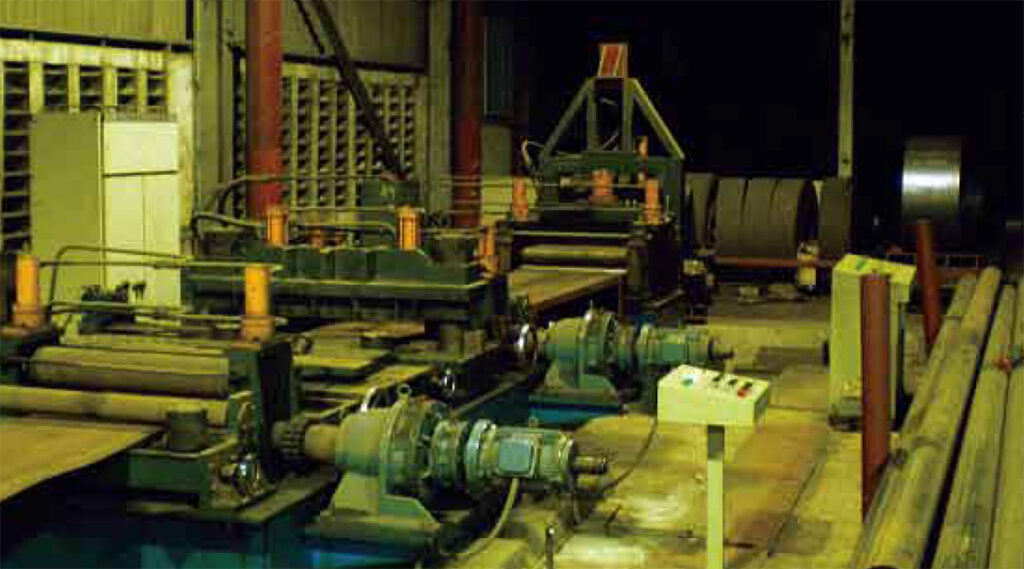
High Frequency Induction (HFI) Pipes

In the diameter range of DN80mm – DN200mm, pipes are produced by using high frequency induction heating to make the longitudinal weld. TSP chose this process due to advancements in the production technology, extensive track record and stringent production specifications, and tests which have greatly improved the performance of the pipe. Today, the HFI pipe is widely
accepted by a number of operators for high pressure fluid and gas transmission services

Steel Fittings and Joints

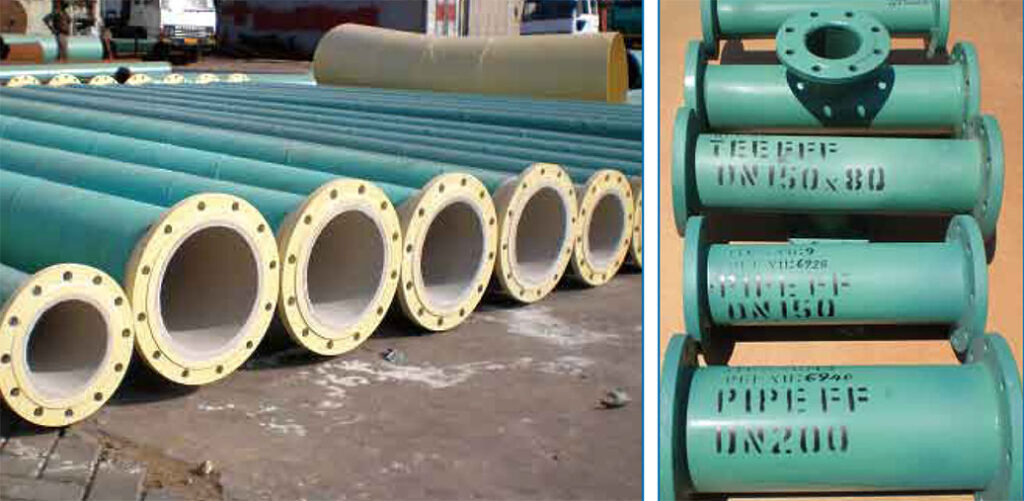
A wide variety of epoxy coated and lined fittings are manufactured as accessories for pipes.

Typical fittings are:
• Bends
• Tees (Equal and Reducing)
• Tees (Swept and Radial)
• Reducers
• Laterals (45 and 60 degrees)
• Wyes
• Expansion Joints
• Swivel Joints
• Dismantling Joints
• Flanged Spigots and Sockets
• Double Flanged Pipes

Wide Applications of Steel Pipes

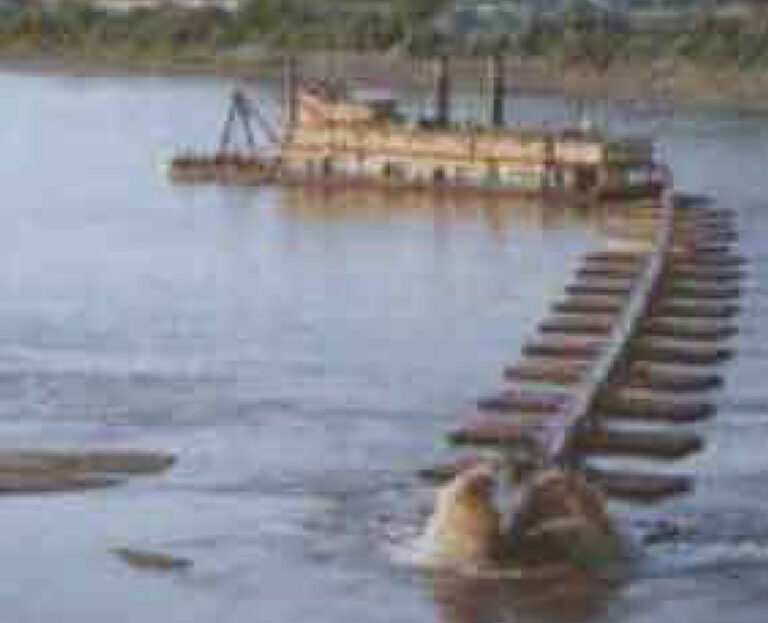
Many kilometers of steel dredge pipes have been used throughout the world in port dredging works and in mine dredging activities, particularly those involving the processing of mineral sands. Such pipes can be manufactured from AS: 1204-1972 steel plate or other
more specialized steels which offer better abrasion resistant qualities combined with higher yield strength.
Both shore and floating line pipes are available in a wide range of sizes and thicknesses to suit requirements. In the case of floating dredge pipelines, support pontoons are usually provided by steel mains. Steel mains are also used to manufacture wye pieces, bends and fabricated gate valves to suit the pipelines. The dredge pipes can be fitted with a variety of different joints including rubber slip-on sleeve joints,
flanged joints, quick acting wedge lock couplings, and cast steel ball joints.

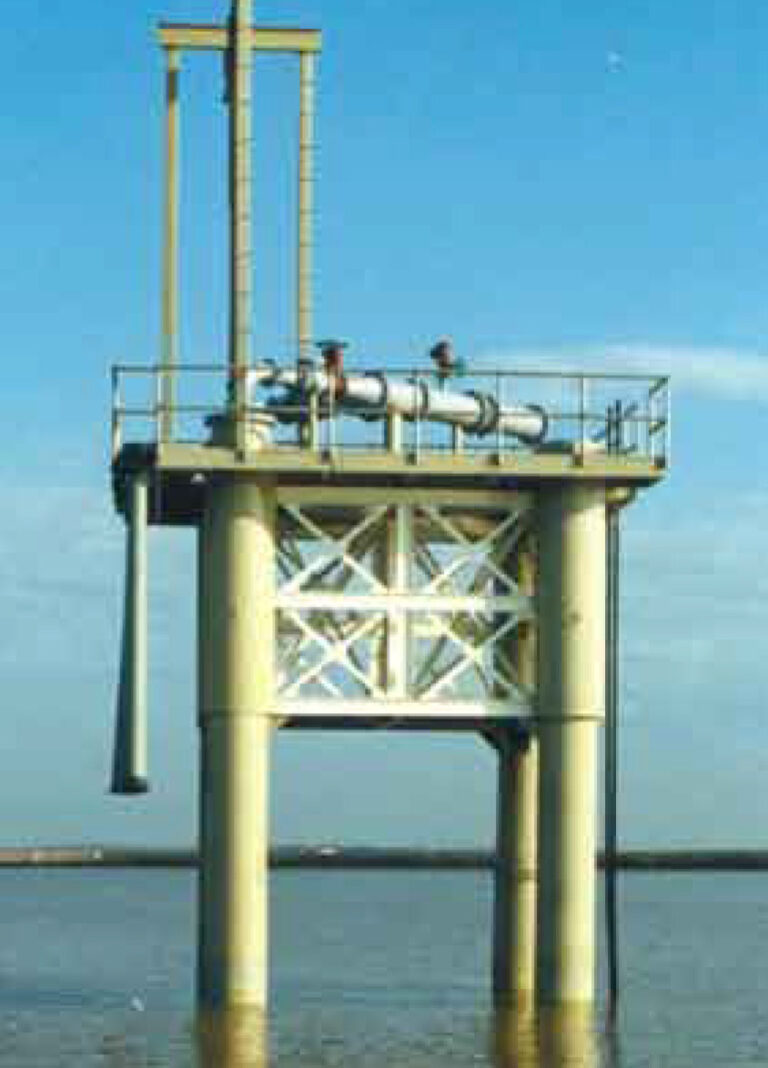
Steel pipes are also extensively used as water, sewage, gas and oil transmission sub-marine lines. Other marine applications include sub-aqueous crossings and intake structures. The high strength, resilience, ductility and weldability of steel pipe makes it possible to assemble complete underwater sections with butt or lap welded joints then lower or pull the assembled sections into the underwater trench. For lengthy subaqueous installations, pipe sections may be welded and lowered into the water in a continuous string from barges. Marine steel pipelines are provided with special outer protective coatings. It is often necessary to weight coat the outer surface of the pipe, or to provide suitably designed pre-cast concrete weights to overcome the buoyancy of the pipe particularly when empty, so as to secure it onto the sea or river bottom. This work can be undertaken by steel mains.

 The high beam strength of steel pipe makes it ideal for bridge and aerial crossings, as well as in pipe gallery installations. Supports can be installed further apart than with other materials, thus reducing overall cost and weight. In pipe galleries, long lengths can be installed, necessitating fewer joints that need support.

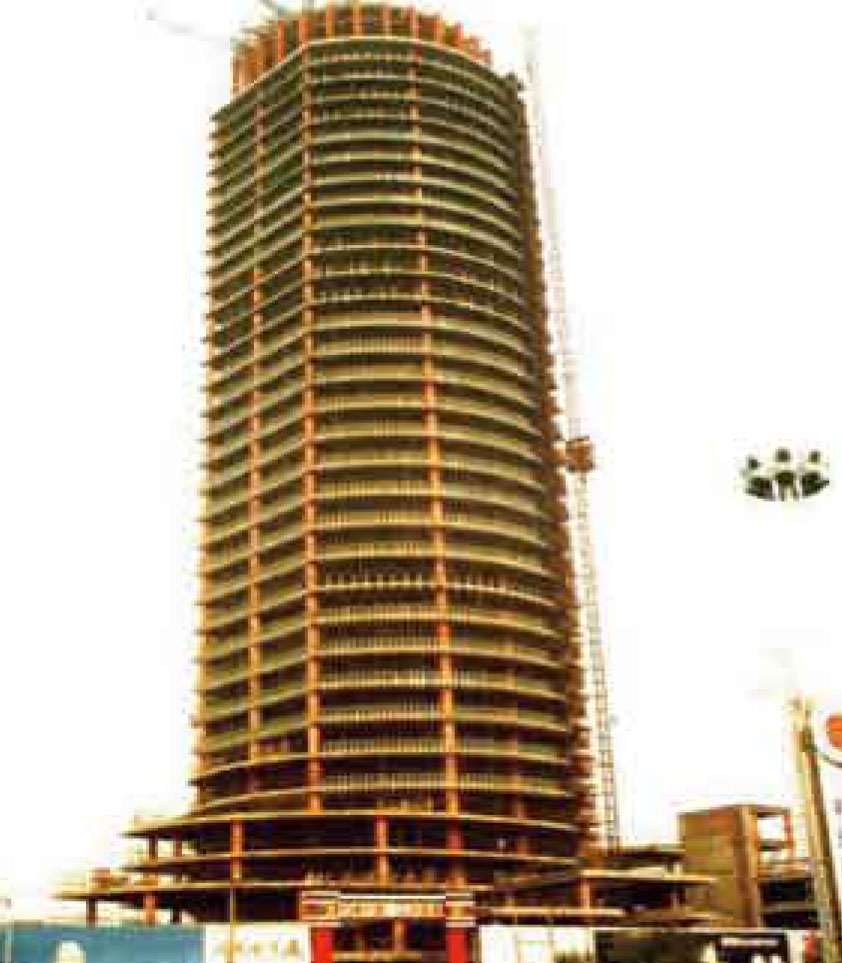
 Welded steel pipes are widely used in a variety of load bearing structural components such as:
• Columns in factory buildings
• Falsework in bridge construction
• Wharf structures
• Support structures for industrial components
• Offshore drilling platform

In addition to being a sound structural material, steel piping also presents a clean and aesthetic appearance that is easy to clean and paint. For falsework in bridge construction and for offshore drill platforms, the employment of welded steel piping offers other advantages; the piping can be fabricated into sections on the shore line, the ends sealed, and the units floated into position for the final erection.

There is a growing need for this product on berthing and mooring dolphins at port and marine installations, thus the particular mention of this specific type of pile. Piles used for this purpose have achieved considerable significance in providing berthing accommodation for vessels of all types. Such piles are constructed from high elasticity steels capable of absorbing extremely violent ship impact loadings.

The piles are usually driven in specially designed groups with bracing systems or diaphragms designed to eliminate torsional effect in order to distribute blows from any direction equally to all piles, inducing them to bend simultaneously. The lower sections of these tubular piles and all sections, where the highest stress concentration is likely to occur, are constructed from steel with a high minimum yield strength such as DIN 17100 ST52-3, whilst from an economic viewpoint, the upper and also less stressed section can be constructed from steel conforming with DIN 17100 ST44-2. The design of the pile is important and it is usual for varying thickness sections to be employed in the pile manufacturing process to give the required elasticity and designed properties.

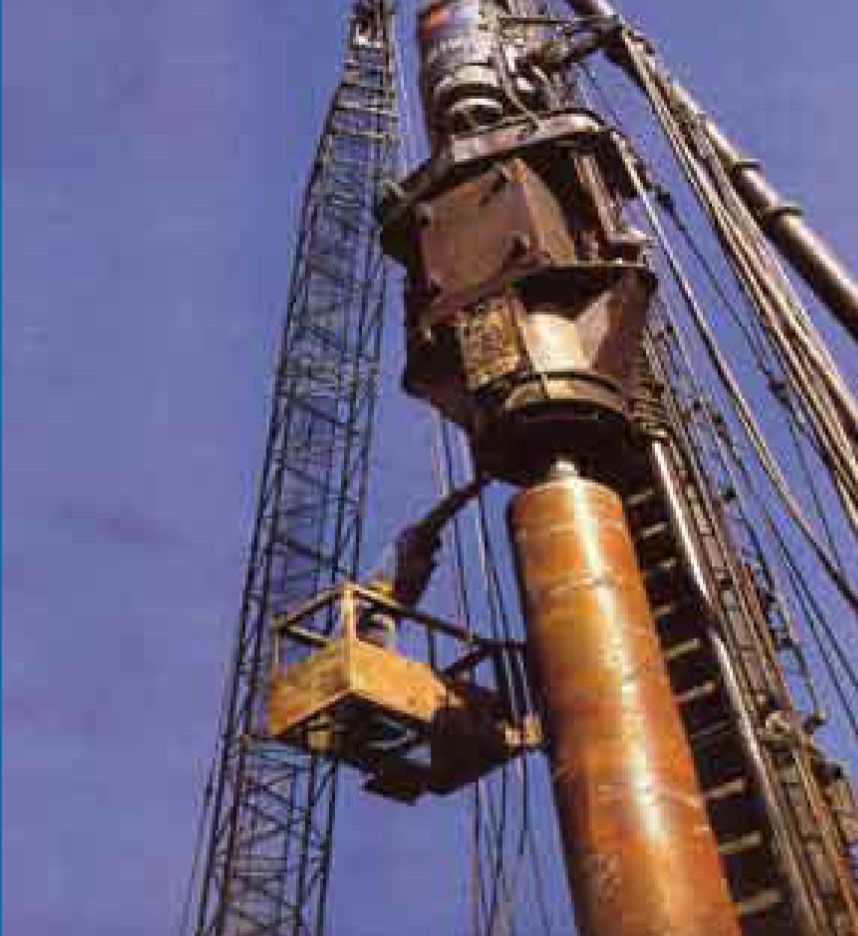
Solid and dependable foundations are built on welded steel piles. For many years leading contractors and engineers have used steel mains piles under bridges, buildings, wharves, piers and numerous other structures requiring firm dependable foundations. Given the advancement in the engineering practice, steel pipe piles provide construction designers with the necessary tools to assess future foundation problems.

Steel pipe piles have been used in every soil condition and are supplied to suit designed loads ranging from 10 tonnes to more than 1,000 tonnes per pile. To support a foundation, the piles are driven to the required resistance or seated in rock, and filled with concrete and steel piles are suitable for use with most standard pile driving equipment. However in the large diameters, (e.g. 914.4mm/ 36 inches and above), they are usually referred to as caissons and are often drilled in, jetted or jacked, or a combination of these methods may be used.

About Company

We Specialize in Manufacturing of Steel Pipes and Fittings to International Standards.

Where to find us

Plot 4, Ubungo industrial Estate, Morogoro Road, Dar es Salaam P.O. Box 5476, Dar es Salaam, Tanzania.

Contact Information

Tel: +255 (0)22-2450457
Mob: +255 784 987 630/1

info@tsp.co.tz

© Tanzania Steel Pipes Limited. All Rights Reserved. Website Developed by POWERCOMPUTERS